
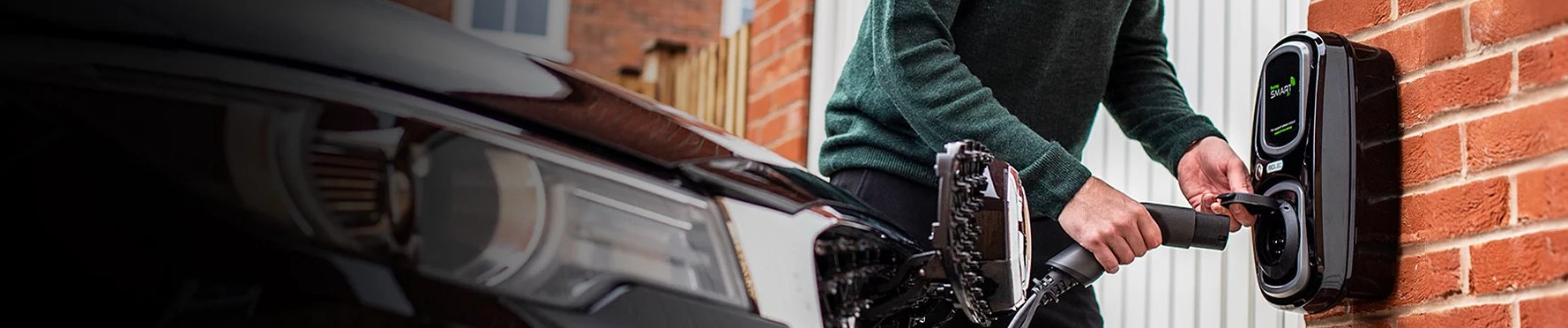
Choosing the Right EV Charging Solution
If you are thinking about or are already the owner of an Electric Vehicle or Hybrid you need to start thinking about choosing the right home EV charging solution most suited to your needs.
You will need to think about which EV’s you are planning, how many charge points you need now and whether you will need Slow or Fast charge points, as this will determine the additional demands placed on your existing electricity supply.
Slow or Fast Charging
Every vehicle has a maximum EV charging rate, but if allowed a dedicated charging point can cut the time it takes to charge by at least half depending on the speed of the EV charger. A Slow Charger typically runs at 3kw whereas a Fast Charger runs at 7kw and can therefore cut the charging time from say 6-11 hours to 2-6 hours, depending on the size of batter. Importantly you may be able to input sufficienct charge with a fast charger for a 3o to 40 mile emergency trip in as little as 20 minutes. The right choice for you will depend on your choice of vehicles, the predictability of your driving pattern and and the length and frequency of your journeys.
For short periods it is possible to charge a single EV at home from any standard domestic 13 amp socket using a 3-pin charging lead for a limited time but it will be slow – typically upwards of 12 hours or overnight or even longer and this can pose safety problems. For both safety and practical reasons manufacturers of EVs recommend having an approved EV charging point (EVCP) professionally installed.
Tethered v universal sockets
To charge an EV, you plug a cable into the vehicle’s universal socket or inlet, older EVs have a Type 1 inlet and newer Type 2 as the UK and European standard capable of fast charging. Make sure you choose the right connector that fits with your EV.
An “untethered” charge point has no cable attached and you connect by plugging in the universal cable that came with your EV. When the charge is finished you can disconnect the cable and take it with you to use elsewhere (at a public chargepoint, for instance.)
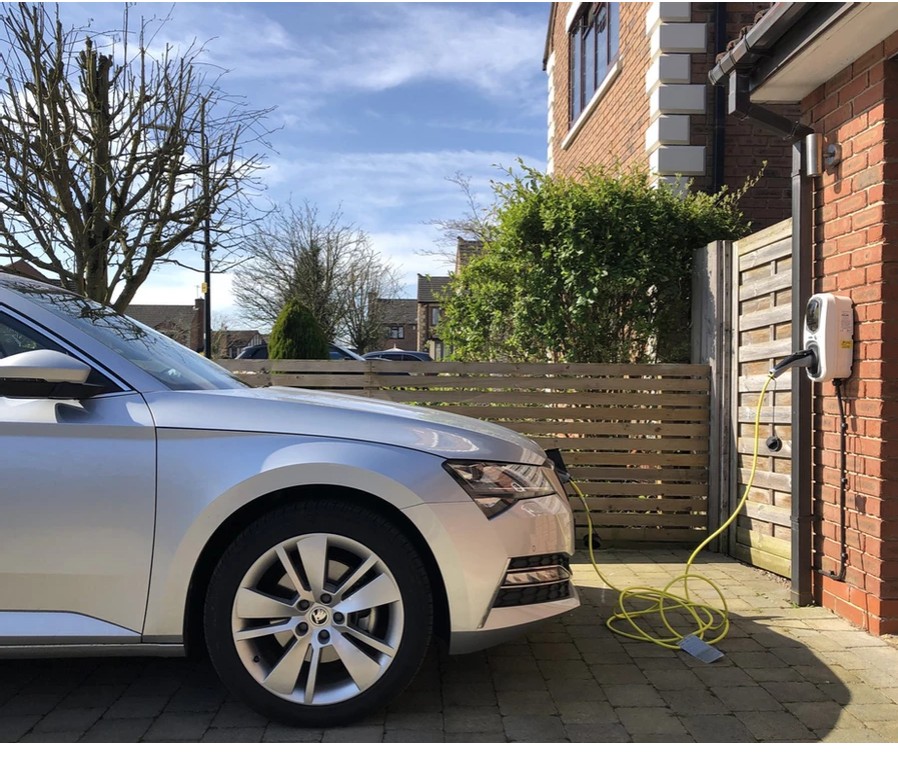
” A Tethered” charge points come with its own cable attached and is used rather like filling a petrol car from a petrol pump. The cable can be coiled on the wall next to the charge point and which connects to the socket of your vehicle provided they have the same type of socket. If you change your EV in future to one that uses a different type of socket you would either need to replace the charge point or modify it to connect with the the new vehicle.
Wall Mounted Chargers
Most people will choose to have a wall mounted charger installed. They are easy to use and there are around 40 manufacturers supplying alternatives so its important to choose the right charger(s) for your needs. At Benchmark EV Charging we have taken the hard work out of comparing the alternatives and recommend the Wallpod EV Homesmart range from Rolec, the UK’s largest manufacturer of outdoor electrical distribution equipment, compatible with all EV/PHEV model, equipped with state of the art “smart charging” capability, we believe it is a great choice : click here to find out why?
What do chargepoints cost?
The Energy Saving Trust suggests the typical cost for a home charge point and installation is approximately £1000. But that is only a very rough guide: the cost of installing a charge point depends on the situation, capacity requirement and physical location.
Tethered units cost more than untethered and prices over time are coming down. You may also be eligible for an OZEV Grant of up to 75% towards the cost of installing a charge point at home under the Electric Vehicle Homecharge Scheme run by the Office for Low Emission Vehicles (OLEV for short) making installation very affordable.
Finding an OLEV Approved Installer:
To qualify for a grant you will need a qualified electricians like Benchmark EV Charging who are OLEV Approved Installer .
To qualify for the OLEV grant (see above), you must use an OLEV Certified installer who will be responsible for ensuring you meet the terms and conditions of the scheme when applying for the grant (unauthorised installers cannot claim the grant on your behalf). OLEV Certified Installers are qualified electricians who have trained in EVSE standards and are approved by the charge point manufacturer/s to install their products.




FREE QUOTE
If you are considering switching to electric vehicles and would like some helpful advice about EV Charger Installation please get in touch.


